
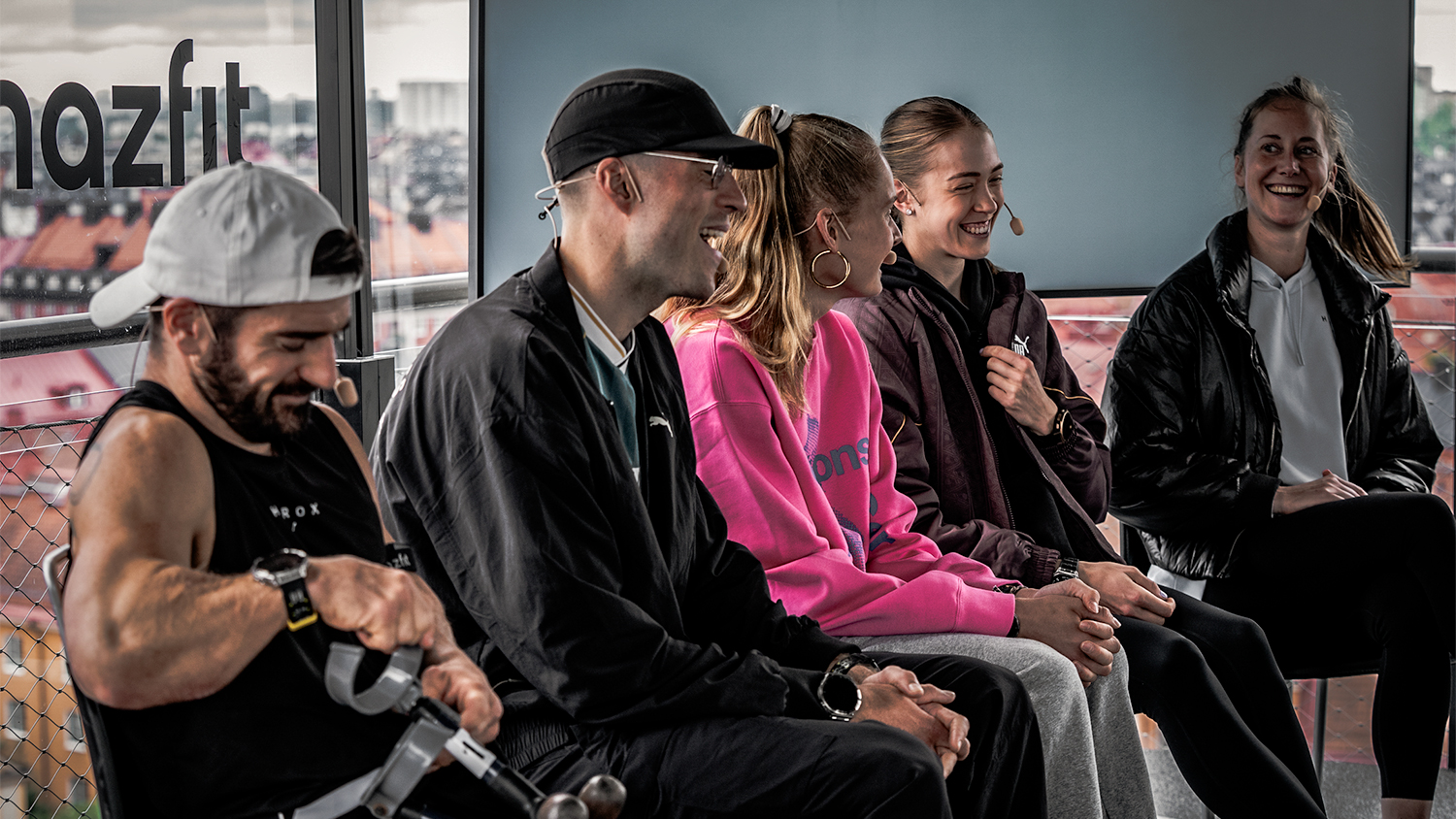
A few days before the most important weekend of their season, they sat side by side on a stage in Stockholm: the defending champion, the woman who swept all four Majors this season. The youngest of the group, the European champion, and the athlete who proves HYROX is about more than a number on a clock. Five completely different stories, one shared subject: how do you handle the data, the doubt, and your own ego once the margins have shrunk so far that fourteen of the world’s fifteen best men finish within three minutes of each other.
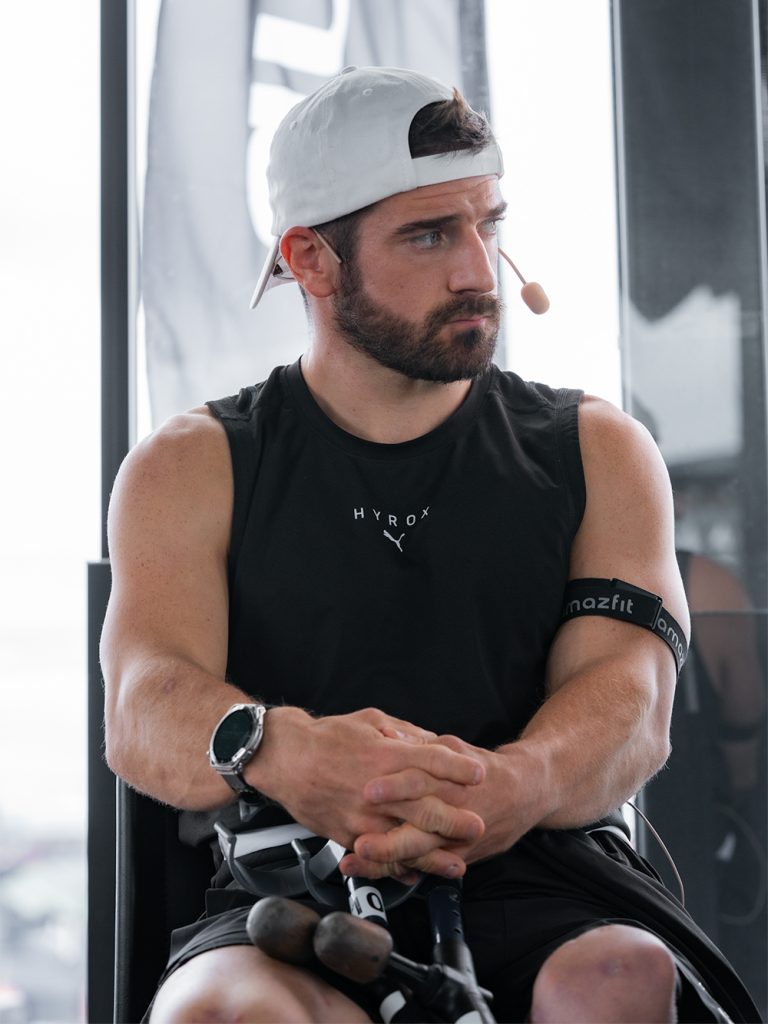
We were invited by Amazfit for the launch of the Balance 3 and HYROX Training System. And were in the room as Till Schenk led the conversation with Linda Meier, Joanna Wietrzyk, Emilie Dahmen, Hidde Weersma and David Wetherill. Five athletes speaking openly about what sits behind the result. Not the training plans themselves, but the conversation that precedes them.
How much do you trust the data, and how much do you trust how you feel?
The shortest answer came from Emilie Dahmen, the youngest of the group: by her own admission, she’s still not good at taking it easy, even when her heart rate variability is clearly telling her to. It’s exactly the tension every serious athlete has to navigate. You want to feel progress, but the numbers sometimes know before you do that one more session will take more than it gives.
“I’m really bad at taking it easy. I think you can ask Hidde, but I do think that I am slowly getting better.”
Hidde Weersma, who coaches alongside his own career, recognises the pattern. For him, the relationship between athlete and coach isn’t about handing over data and receiving a plan back. It’s a daily conversation: how do you feel, what does the data say, and what do we do with that. Neither one automatically wins. Some days an athlete feels strong while the numbers are flashing a warning, and it’s precisely that combination of feel and data together that decides whether a session gets pu
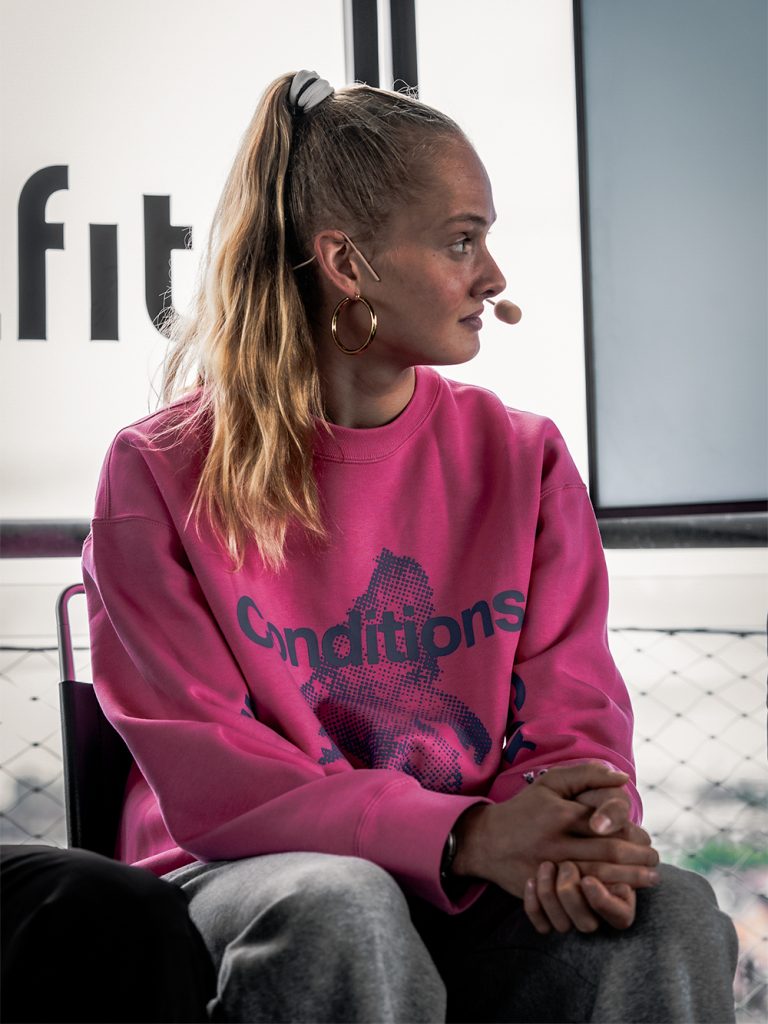
When do you ignore your coach, and when do you not?
Hidde Weersma put it well in a statement around the launch: “In HYROX, the solution is not training harder.” The key, in his view, is identifying weaknesses precisely and targeting them directly in training.
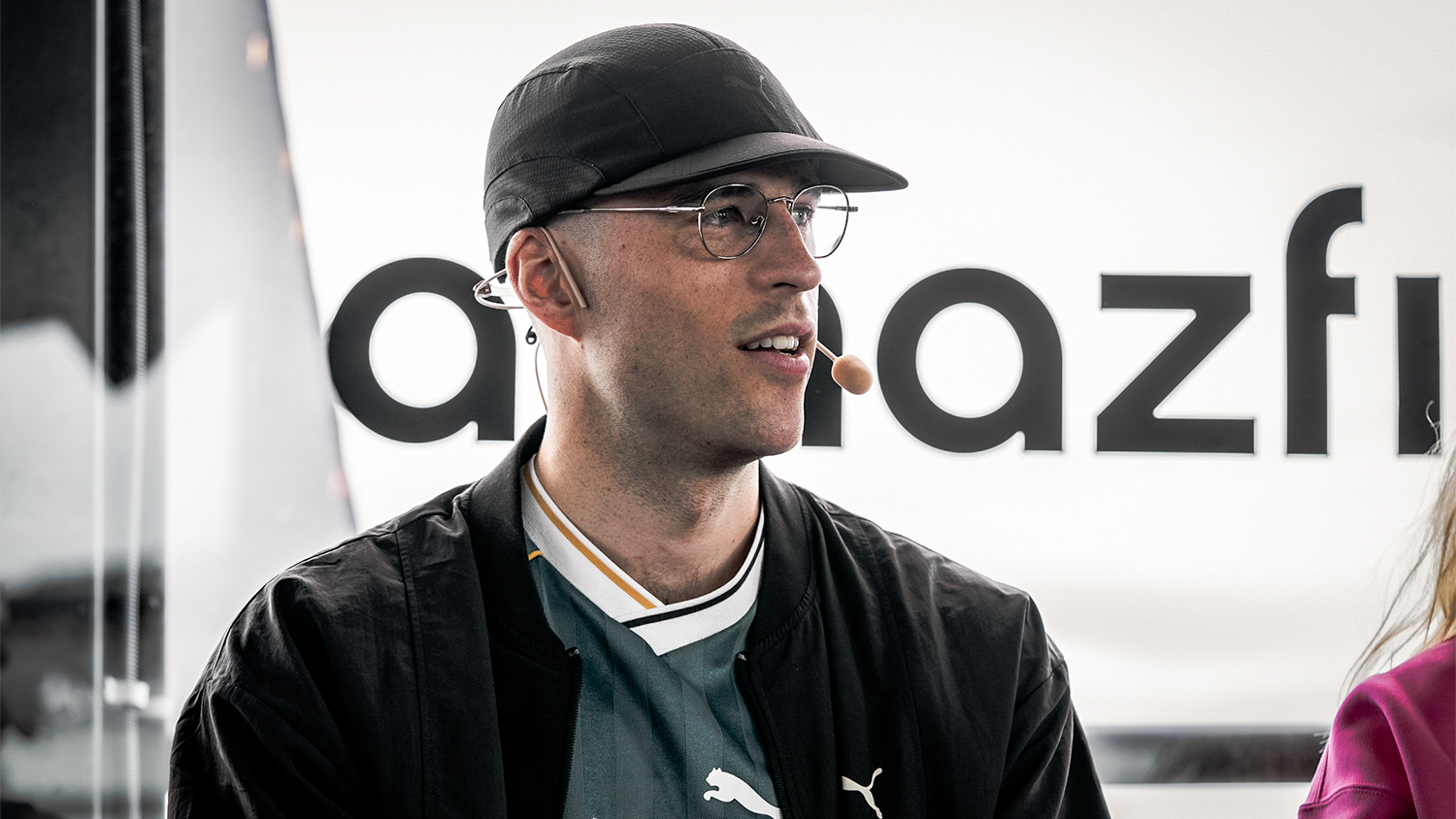
The easy mistake, several athletes agreed, is dumping too much intensity into sessions that were never meant to carry it. For Emilie Dahmen, that backfired earlier this season: she pushed so hard in the “unimportant” sessions that her key sessions suffered for it. “And that maybe hampered her performance a little bit at the key sessions,” Weersma noted dryly. The lesson travels well beyond HYROX. Not every training needs to be your best training, and the willingness to accept that is exactly what makes the sessions that matter, matter more.
At the same time, the athletes warned against the opposite extreme. A mindset that always wants to go is, in their view. A far better starting point than a coach who has to drag someone out the door every day. The real skill lies in telling the difference between training smart and talking yourself into an excuse.
What do you do with a season that didn’t go your way?
Linda Meier, champion since last year, had a less linear season than her title year. Her answer was strikingly level headed: progress is never a straight line, and the step back she felt this season is simply part of absorbing new training methods.
“Trust the process is something which is really true. And that helped me last season and it will help me this season too.”
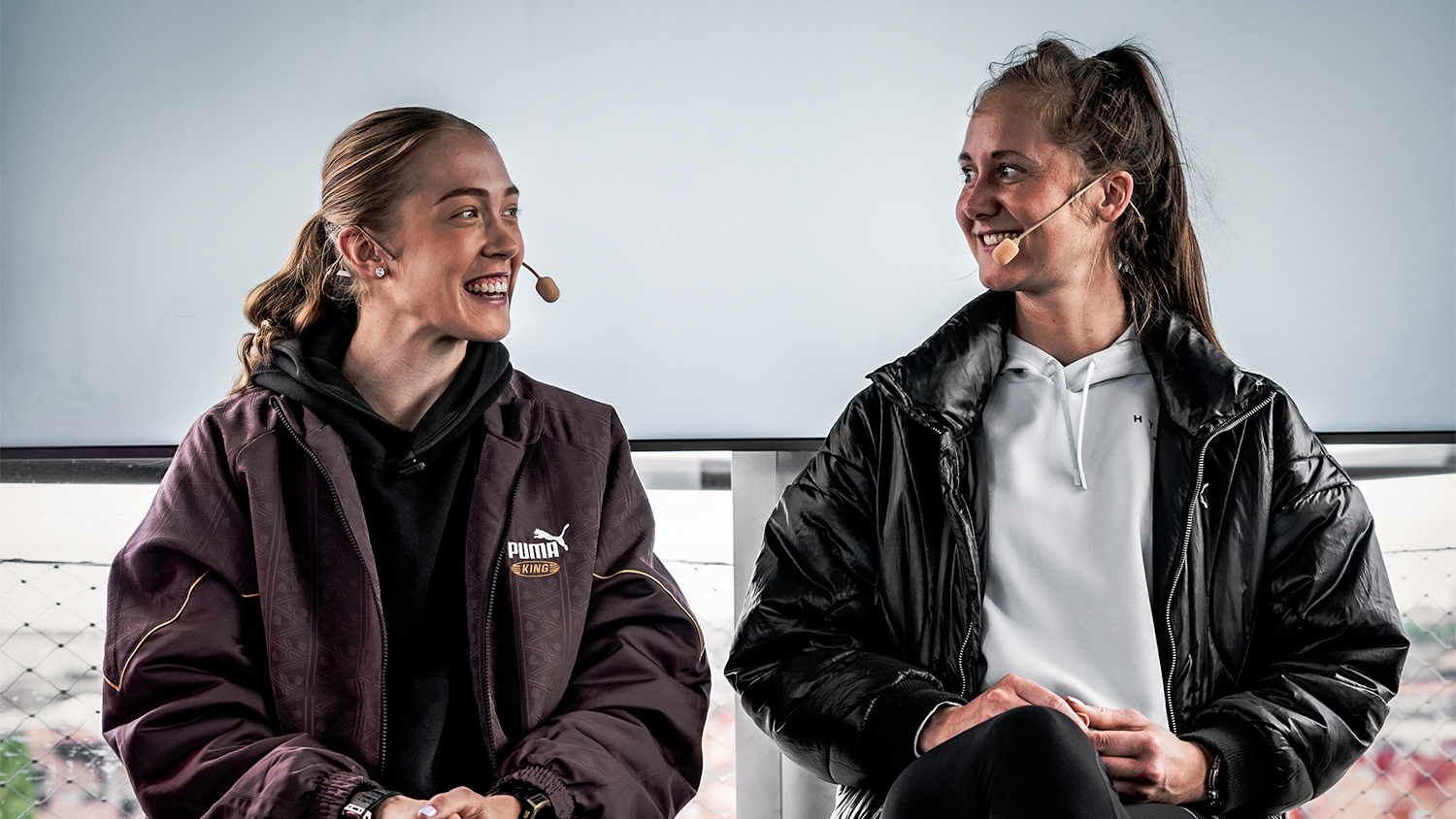
“Trust the process” sounds like a cliché until it becomes your own lived experience, and for Meier that’s exactly what it became. The advice she was given right after winning the world title, and the same advice that carried her through this one.
What drives you beyond the podium?
The most grounding moment of the conversation came from David Wetherill, adaptive athlete and Ironman racer. Where the other four spoke explicitly about times and placings, he deliberately uncoupled his motivation from outcome. His body, he said, is in negotiation with his goals every single day. Some days his maximum effort is half of what it was the day before, and learning to accept that is, for him, the core of adaptive fitness. Not rigidly sticking to a plan, but re-reading what’s available to him on any given day.
“It’s going to be beautiful no matter what.”
Not a stock motivational line, but an outlook that explains exactly why he’s regarded as a source of inspiration within the adaptive HYROX community.
What does this tell you about what a top team actually looks like?
A recurring thread, especially from Dahmen and Wietrzyk, was just how much sits behind an athlete once the level rises: a running coach, a physiotherapist, a nutritionist, alongside the main coach. For Dahmen, that build happened fast. From a first elite race where she didn’t expect anything better than sixth, to a full support team and a sponsorship deal within roughly fifteen months. The kind of rise that looks like raw talent from the outside, but mostly demands structure and patience from within.

What this panel made clear is that the gap between the world’s best athletes isn’t only in the legs. It’s in how they handle a heart rate monitor saying no while the head says yes. A season that refuses to cooperate, and the question of what’s left once you set the result aside.
You want to know this
- What exactly is hybrid training?
Hybrid training combines endurance work with strength training, so the body can handle both running and functional strength stations like the ones in HYROX. The challenge sits in the overlap: too much strength work costs you on the legs, too much volume costs you on recovery. - How do you know whether to rest or push through?
Elite athletes combine objective data, heart rate variability, training load, with a daily check on how the body actually feels. Neither signal automatically wins; the combination drives the decision. - What’s the difference between key sessions and filler sessions?
Key sessions, intervals, specific HYROX simulations, determine your level; the rest of your training builds volume at low intensity. Pushing too much intensity into the filler sessions, several Elite athletes agreed, directly undermines the quality of the key sessions. - Why is “trust the process” more than a cliché for elite athletes?
Because progress is rarely linear. Athletes coming off a strong year who hit a rougher season lean on this principle to push through a phase where results aren’t visible yet, even as the underlying training adaptations are still taking hold. - Is adaptive HYROX comparable to the regular Elite competition?
The format is the same, but the goal shifts. For adaptive athletes like David Wetherill, it’s less about absolute times and more about reading, every single day, what your own limits allow given your physical circumstances on that day.