
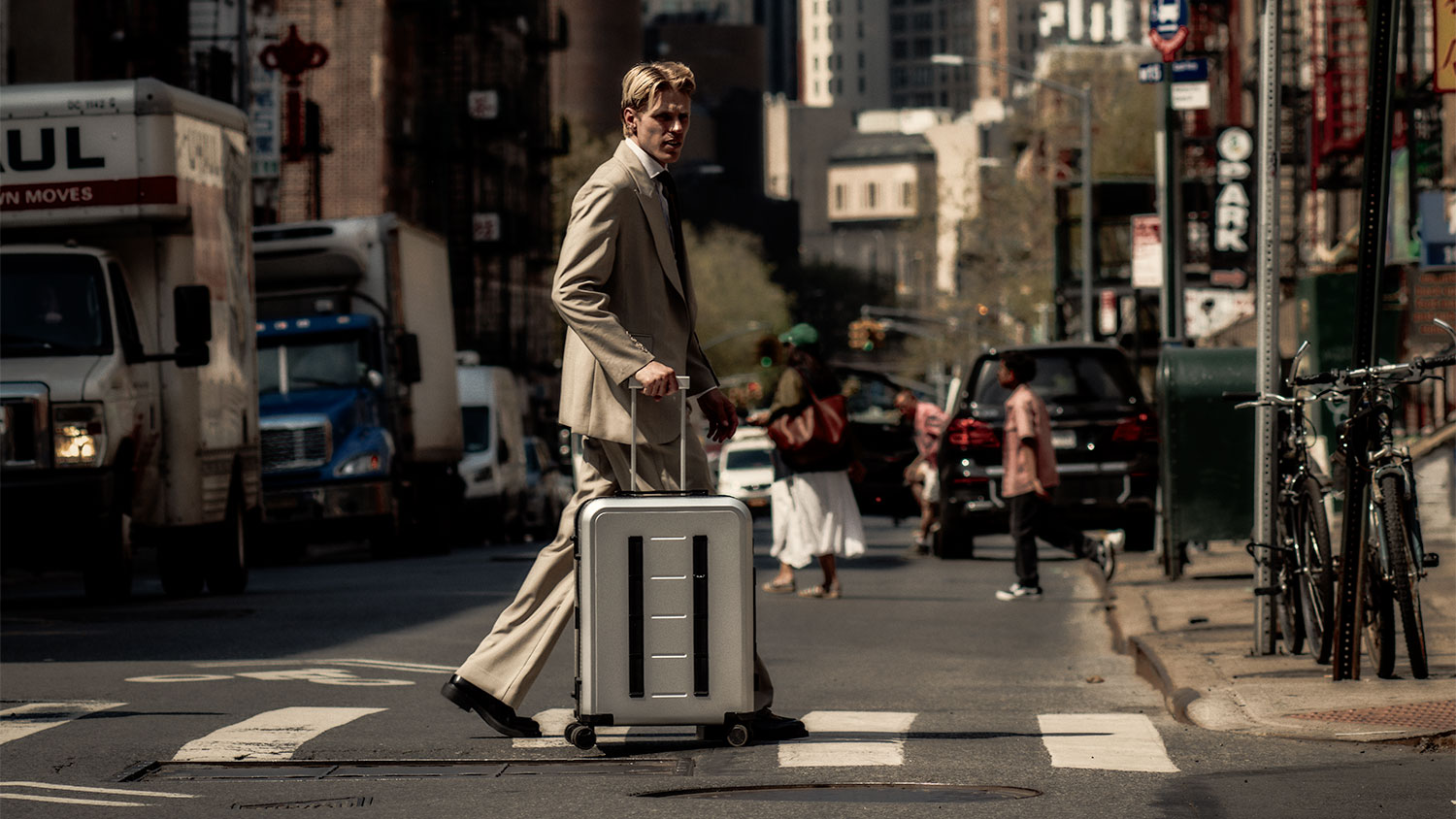
There’s something peculiar about the way people buy travel luggage. They spend weeks selecting the right headphones, read spec sheets for laptop bags as if becoming a shareholder, and then choose their suitcase based on colour and how it looks on Instagram. The market has always known this. Which is why one German brand was allowed to set the tone for decades with its aluminium Klassiker, virtually unchallenged, while innovation was limited to quieter wheels, a new colour palette each season, and the Ramverk Alu didn’t yet exist.
Db Journey, a Scandinavian brand that made its name on ski and surf bags, is now breaking that pattern open. With the Ramverk Alu, they’re not launching just another aluminium alternative, but a technically substantiated argument for thinking differently about what a suitcase can be. And honestly: it was about time.
Two alloys, because the market only used one
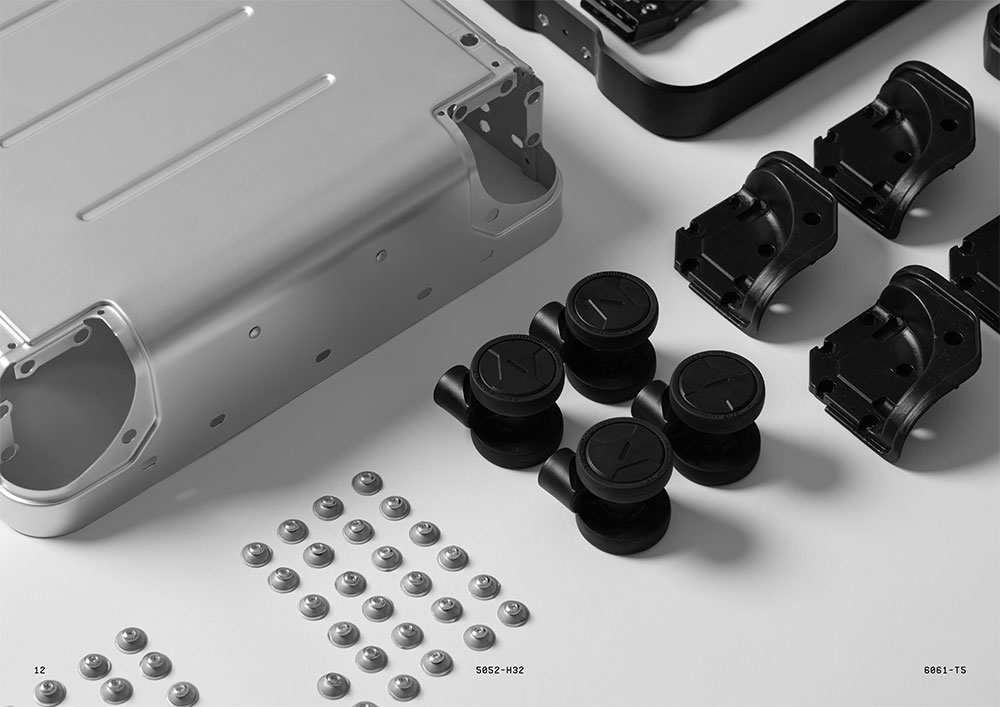
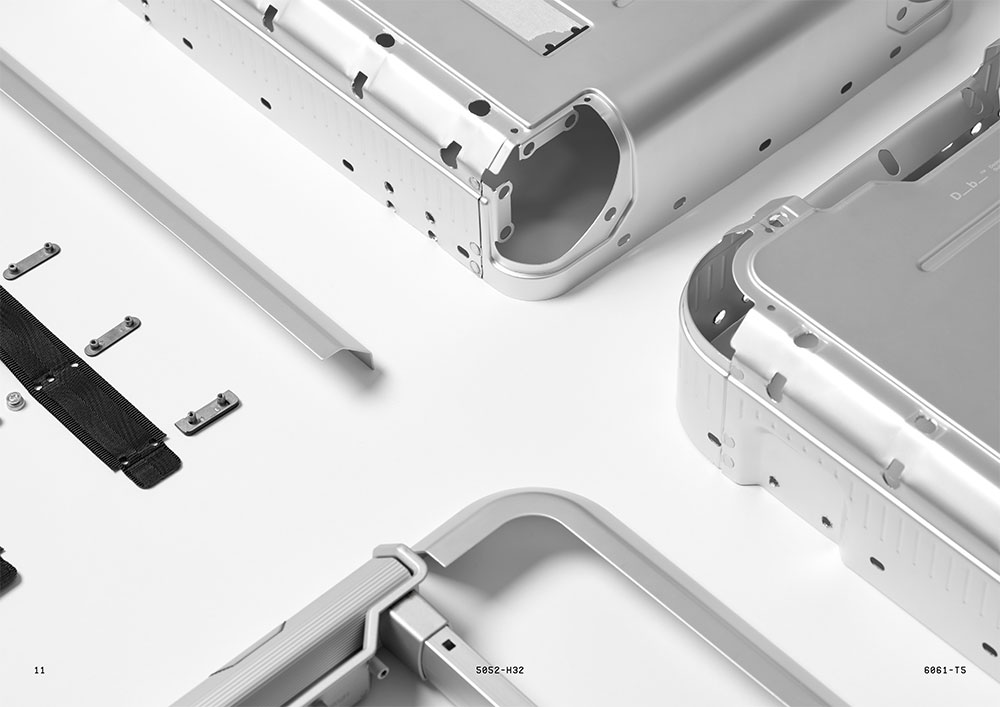
The first thing you notice about the Ramverk Alu is that Db explains its choices. The suitcase itself states which aluminium alloy is used where: 5052-H32 for the outer panels that baggage handlers work over daily, and 6061-T5 for the structural components such as the trolley handle and central frame. The first material is flexible and corrosion-resistant. The second is harder and stiffer. That combination is nothing new in engineering, but it’s virtually unique in this product segment.

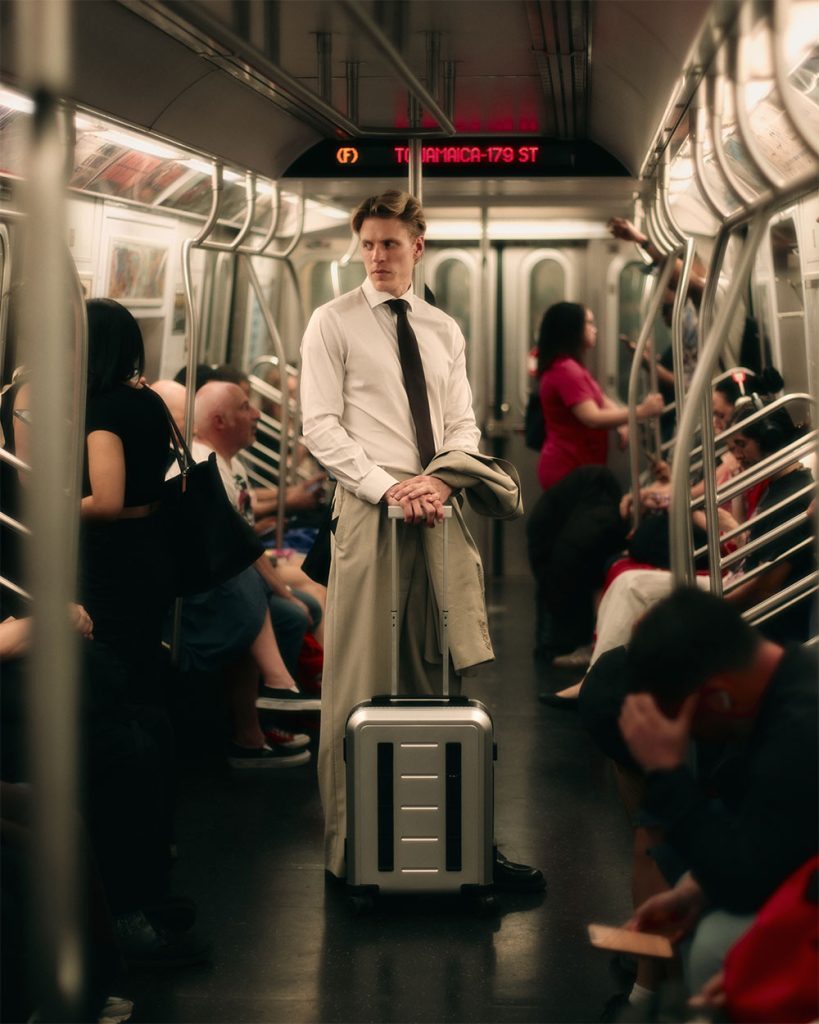
Most competitors choose a single alloy and run it through the entire case. That’s simpler, cheaper, and the result is a product that’s everywhere slightly too good or slightly too poor for its specific function. Db takes the harder route and makes it visible. That’s a design philosophy.
Automotive thinking in a baggage hall
The heart of the construction is the CenterFrame: an aluminium backbone that distributes forces from impacts and pressure across the entire structure. Around the outer edge sits an EdgeFrame that absorbs and redistributes impact. This is the body-in-white logic that car manufacturers have applied for decades: not maximum rigidity, but the combination of stiffness and controlled deformation. The suitcase doesn’t break under a hard blow, it deforms in a controlled manner and retains its geometry.
That sounds technical, and it is. But the practical implication is concrete: a dented aluminium suitcase is a repair project. A cracked polycarbonate hardshell is waste.
Repairability as a standpoint
This is where the Ramverk Alu becomes interesting beyond the gear segment. The suitcase is assembled entirely with screws. No rivets, no components that require special tools to remove. Wheels, carry handle, locks: everything is serviceable at home, with tools you already own. The carry handle is replaced with a standard HEX key. Db also has repair centres available for those who prefer to outsource the work.
This is not a luxury feature. This is a position. A suitcase you can still have repaired ten years from now instead of replaced is a different kind of product than the market typically delivers. It also asks something different of the buyer: the willingness to own something rather than consume it.
The handle, the locks, the interior
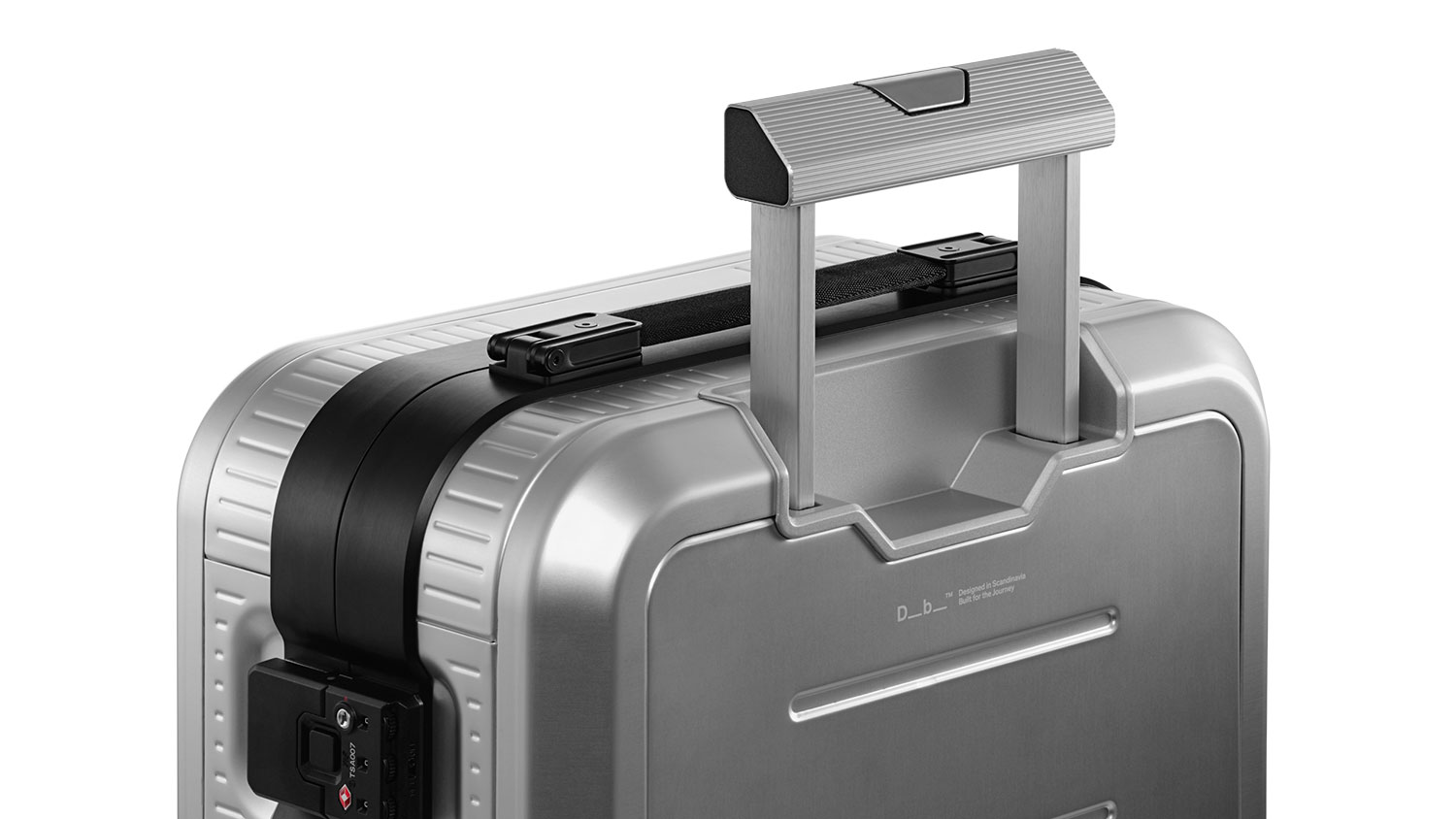
The trolley handle sits in a unibody aluminium housing that reinforces the entire handle path. Extending it feels precise and quiet, without the plasticky play that most suitcases only make you notice once it starts to irritate. The dual TSA locks are integrated into the side panel of the frame, which opens more intuitively than the standard centre-of-the-lock format.
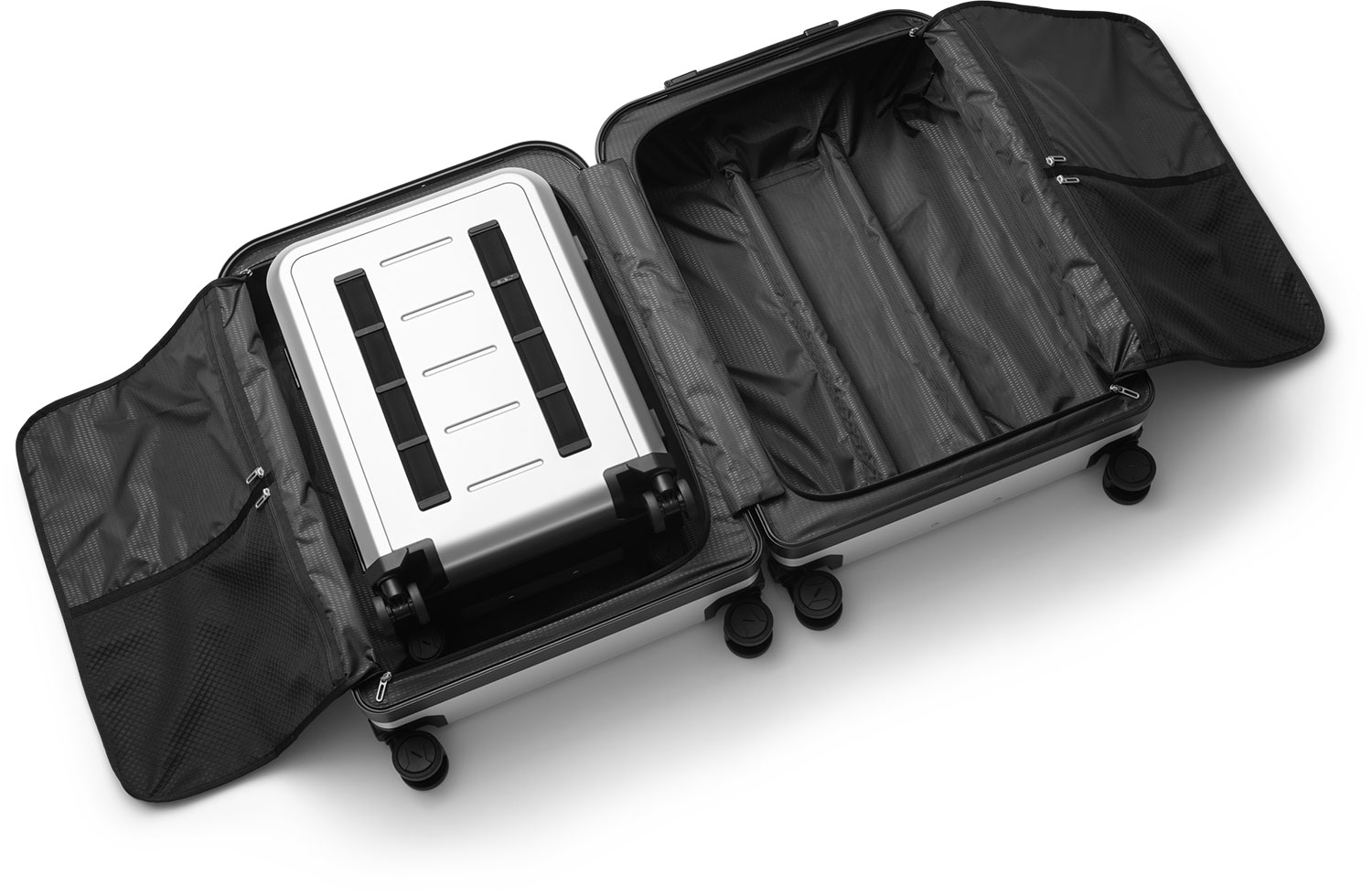
The interior is clean and functional: mesh pockets and compression straps in both halves, no excessive lining, easy to keep clean. No space wasted on aesthetics without function.
Carry-on or check-in
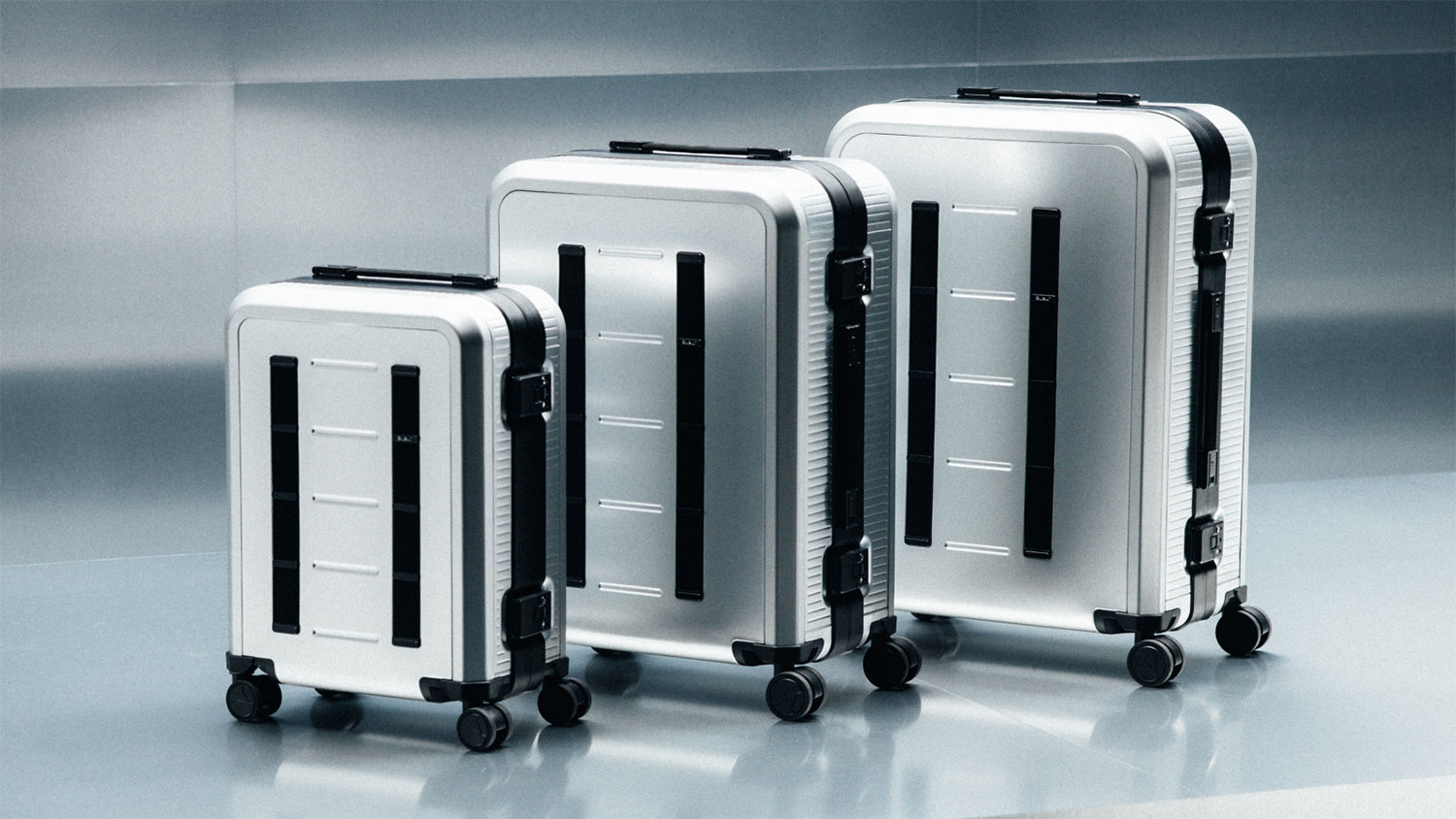
The Ramverk Alu is available in three sizes. The Carry-on is suitable as hand luggage for shorter trips. The Check-in Medium is the most versatile option for those travelling a little longer. The Check-in Large provides extra packing space for extended journeys.
What this actually says
A suitcase is one of the few products you carry with you for years through situations where you have little control over anything else. Baggage belts, aircraft holds, taxi boots. The Ramverk Alu is designed from the assumption that you want the best material in the right place for exactly that, and that you want to be able to have it repaired ten years from now rather than replaced.
That Db, a brand with no historical claims in this segment, now makes that argument most sharply, says something about the state of the market. And something about what a good suitcase should actually be in 2026.
Worth knowing
- Why does the Db Ramverk Alu use two aluminium alloys?
Because different parts of a suitcase place different demands on the material. The outer panels that need to withstand impacts and corrosion are made from the more flexible 5052-H32. The structural components such as the central frame and trolley handle use the harder and stiffer 6061-T5. Most aluminium suitcases opt for a single alloy, which always results in a compromise somewhere. - Is the Db Ramverk Alu genuinely repairable at home?
Yes, and that’s a deliberate design choice. The entire construction is screwed together, with no rivets or special tools required. Wheels, carry handle and other components can be replaced yourself. Db also offers repair centres for those who prefer to outsource it. - What’s the advantage of an aluminium suitcase over polycarbonate?
Aluminium dents under a hard impact rather than cracking. A dent is fixable; a crack in polycarbonate is not. Over a longer period of use, an aluminium suitcase is therefore more maintainable, though it is heavier than the lightest hardshell alternatives. - How does the Db Ramverk Alu compare to Rimowa?
Rimowa has been the dominant player in aluminium luggage for years. The Ramverk Alu differentiates itself through its dual-alloy strategy, the automotive CenterFrame construction and its fully screwed assembly. Rimowa uses rivets on some models, which limits home repair. - Who is the Db Ramverk Alu for?
For anyone looking for a suitcase as a long-term investment rather than a purchase they’ll replace after a few years. The suitcase is technically strong, repairable and built with material logic you rarely see in this segment. The price reflects that.